What Real Revival Looks Like — And Why Most Churches Miss It

I have been in rooms where the air felt different.

Not the air conditioning — though many revival services have been held in gymnasiums without any. I mean something else. A heaviness and a lightness at the same time. People who were not Christians walking in out of curiosity and walking out weeping. Marriages restored in a single service. People healed. People saved. A congregation that came in like church attenders and left like a family on fire.

That is revival. I have seen it. And I have also seen the counterfeit up close.

The counterfeit revival is an emotional event. It peaks on Friday night, looks great in the photos, and is forgotten by the following Sunday. The worship was loud, the altar call was long, and people felt something — but nothing changed. Nobody’s marriage is different. Nobody’s Monday is different. The community around the church is completely unaffected.

Here is what I have learned about the difference.

Real revival begins before the event. It begins when a pastor decides, privately, before anyone else knows, that they are no longer willing to settle for a church that fills seats but does not change lives. That decision — that holy discontent — is the match that lights the fire. The preacher, the music, the weekend itself — those are just kindling. The match is a pastor who means it.

Real revival is sustained by follow-through. What happens the Monday after is more important than what happened on Sunday night. Does the leadership know what to do with the people who came forward? Is there a next step? Is there a community to absorb them? Revival is not a concert series. It is a transfer of life from heaven to earth that requires a place to land.

And real revival requires someone willing to carry it. That is the part most people skip. They want the moment but not the mission.

If your church is ready for something real — not an event, but a movement — I would love to talk.

— Mike

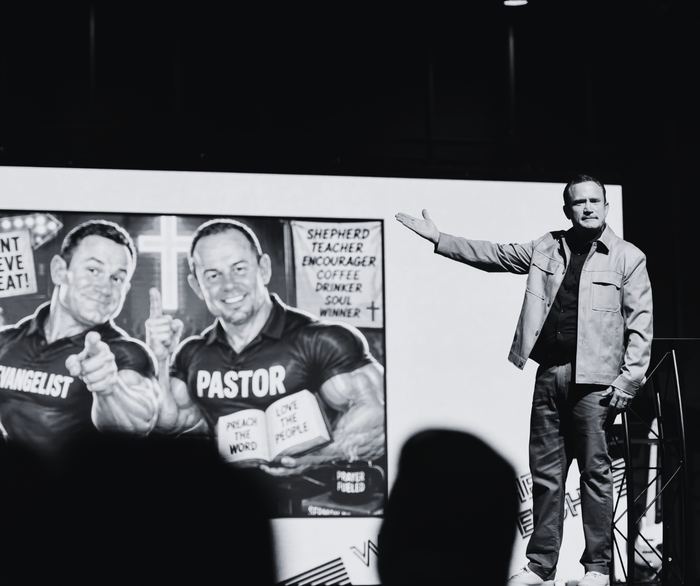
Evangelism Isn’t Just the Pastor’s Job

Somewhere along the way, the Church outsourced its most important assignment.

We hired pastors to preach, elders to govern, and deacons to serve — all good and biblical things. But somewhere in the job descriptions, the Great Commission got quietly reassigned. Evangelism became the preacher’s responsibility. Reaching the lost became a line item in the outreach budget. And the average person in the pew was effectively excused from the mission field.

I want to challenge that.

Not because pastors should do less. They should do more — more equipping, more training, more releasing. But the New Testament picture of the Church is not a building full of spectators watching a professional represent them before God. It is an army of ordinary people who carry the presence and message of Jesus into every corner of their ordinary lives.

Your neighbor does not need to come to your church to hear the Gospel. They need you to have a conversation.

I travel to churches across the country, and one of the things I do is evangelism training. Not four-hour seminars with twenty-step frameworks. I mean practical, simple, back-to-basics work on how to have a real conversation about Jesus with a real person in your real life.

What I find, almost without exception, is that people are not unwilling. They are undertrained and under-encouraged. They have never been told that they are qualified. They have been intimidated into silence by the ghost of a performance standard that was never in the Bible.

You do not need a seminary degree to tell someone what God has done in your life. You do not need to win every argument. You need a story, a willingness, and a Holy Spirit who goes before you.

The Church that reaches its city is not the one with the biggest platform. It is the one where every person understands that they are the platform.

— Mike

The Life Jesus Promised Isn’t Optional — It’s Yours Right Now

“I came that they may have life, and have it abundantly.” — John 10:10

There is a version of Christianity that most people have settled for, and it looks almost nothing like what Jesus described when He opened His mouth in John 10:10.

It is safe. It is comfortable. It is fine. And it is not what He came to give.

Jesus did not say, “I came that you might have a decent life — manageable, mostly peaceful, largely uneventful.” He said abundant. The Greek word is perissos — above and beyond, more than enough, overflow. This is not language for survival mode. This is language for a life that is full to the brim and running over.

So why do so many followers of Jesus live like they are in poverty when the inheritance has already been given?

Part of it is theology. We have been taught to defer abundance — to treat it as a future promise for heaven rather than a present reality for right now. And while there are things that belong to eternity, the abundant life Jesus describes is not entirely postponed. It begins now. It changes how you walk into Monday morning.

Part of it is unbelief — not the dramatic, crisis-of-faith kind, but the quiet, practical kind. The kind that prays but does not really expect anything. The kind that reads the promises and thinks, “That is for someone else, someone more spiritual, someone who has it more together than I do.”

And part of it is simply that nobody ever showed us what it looks like.

That is what I want to do. I have spent two decades traveling to churches and telling people the truth: God is not holding out on you. Jesus came to give, not to withhold. The thief is the one who steals and kills and destroys — that is the enemy’s job description. Jesus came to do the opposite.

If you have been living on less than what God promised, it is time to change that. Not by striving harder, but by believing bigger. The life He offered is still on the table. It has your name on it.

Start there. Today.

— Mike